
A realistic expected ROI target is often in the low single digits, and that is exactly why it matters so much. When expected ROI is tracked correctly, it becomes a cleaner way to measure betting skill than short‑term profit alone because it centers on the value captured versus the market’s closing line.
After years of grinding, I’ve landed on a target I actually trust: a weighted Expected ROI (EROI) of 2.5% to 3%. It isn’t flashy, but it’s the sweet spot where edge and volume meet. GamedayMath’s EROI report is how I keep myself honest.
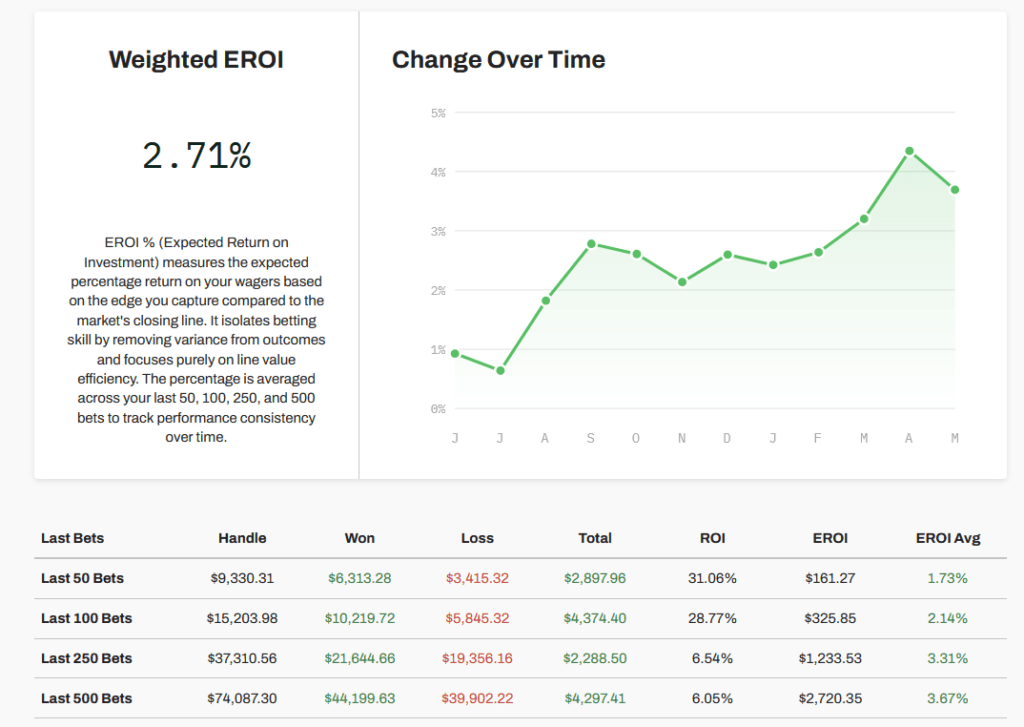
My current weighted EROI sits at 2.71%, right in the target zone
What EROI Actually Measures
EROI (Expected Return on Investment) measures the percentage edge you capture versus the market’s closing line, not versus the final score. That distinction matters: outcomes are noisy, closing lines are not. By isolating line value, EROI strips variance out of the picture and tells you whether your process is profitable.
GamedayMath averages EROI across your last 50, 100, 250, and 500 bets to produce a weighted number. This is the headline figure at the top of the report.
Why 2.5%–3% Is the Sweet Spot
You can absolutely post a higher EROI. Bet only the screaming +EV plays, pass on everything marginal, and you might push 5–7%. The catch? Your bet count collapses, and total expected profit collapses with it.
Drop your threshold too far and the opposite happens: volume explodes but your edge gets diluted by junk plays. The 2.5–3% band is where I get enough qualifying bets to actually move the needle on bankroll, while still maintaining a defensible edge over the closers.
Where the GamedayMath Report Earns Its Keep
A single weighted EROI number is useful, but the real value of the report is in the breakdowns underneath it. The same $789K of handle looks completely different once you slice it by sport, by sportsbook, and by bet type. These slices are where you actually find the levers to pull.
Breaking It Down by Sport
Not every league behaves the same way. Some are tight, efficient markets where a 2% edge is hard‑earned; others are sloppier and more volatile, where EROI swings hard from month to month.
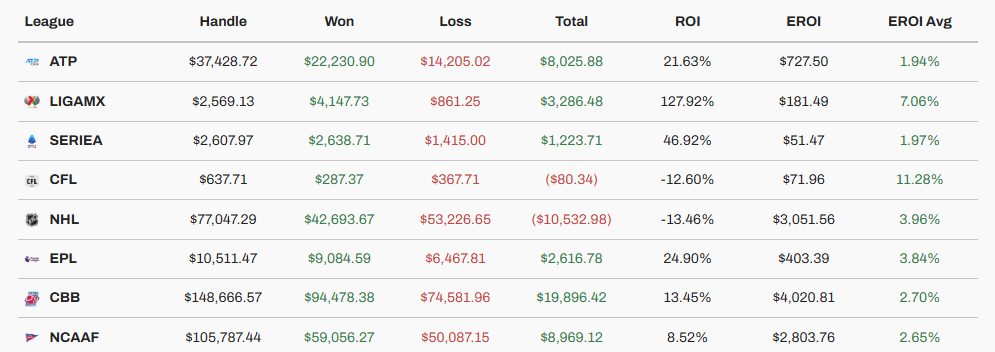
EROI by League
Breaking It Down by Sportbook
Books are not interchangeable. Some price sharp, some leave soft numbers up longer, and some boost markets you’d never touch at standard prices. EROI by sportsbook tells you where your money is actually working.
Hone in on the books where your EROI Avg consistently clears your target, and treat the others as opportunistic.
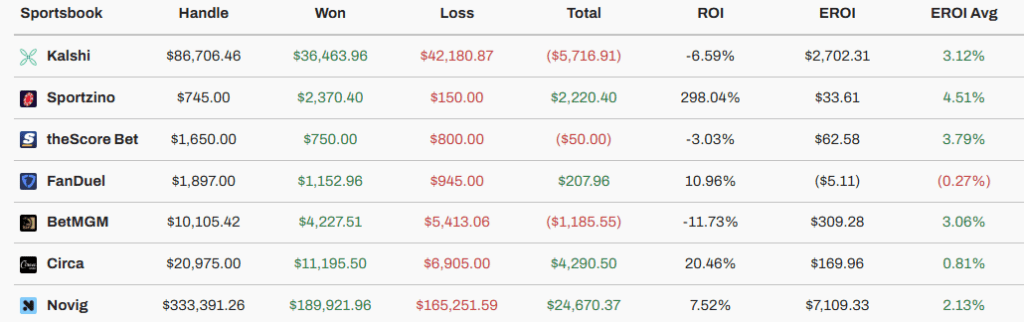
Partial Breakdown by Sportsbook
Breaking It Down by Bet Type
This is where it gets fun. The bet‑type table is short, but the gap is enormous:

EROI by Bet Type
As one can see, the EROI from parlays greatly outpaces the EROI from straight bets. That’s not by accident. It’s the result of only ever playing parlays when the math is in my favor. Specifically:
1. Parlay boosts: When a book offers a +50% or +100% profit boost on a 3‑legger, the boosted price often blows past the true line by a wide margin. Hammer those.
2. Odds boosts and “no‑sweats”: Token boosts on specific markets are a free EROI lift. They don’t show up on every slip, but the report quantifies how much they add when you do play them.
The lesson the table is screaming: my straight‑bet EROI is right in the 1.5–2% zone, while my boosted/parlay EROI is hitting double digits on a small but meaningful handle. You don’t have to choose one or the other. Instead, you stack them. Grind straight bets for volume, and let boosts do the heavy lifting on EROI.
Putting It All Together
Chasing a sustainable edge in sports betting isn’t about hitting one massive parlay or riding a hot streak. It’s about building a process you can measure, refine, and trust over thousands of bets. EROI gives you that measuring stick, and the breakdowns inside the report give you the tools to actually do something with the number.
The bettors who stick around long‑term aren’t the ones with the loudest screenshots. They’re the ones who quietly track their edge, double down on what’s working, and cut what isn’t. Pick a target band you can defend, watch how your EROI moves across sports, books, and bet types, and let the data do the talking.
If you want to start tracking your own expected ROI the same way, check out GamedayMath. It’s the tool I use to keep my process honest and my bankroll pointed in the right direction.