
Power ratings sit at the heart of everything I do at DRatings. They give structure to the chaos of sports and turn games into numbers that you can actually bet into.
What Power Ratings Are
A power rating is a single number that says how strong a team is on a neutral field or court. I use it to capture a team’s true strength under all the noise of wins, losses, hype, and randomness.
Most examples online lean on a basic 0–100 scale, but my DRatings numbers live on a different scale that fits each sport and the math behind my model. You don’t need to match my ratings to anyone else’s. You just need to look at the gaps between teams.
If Team A sits at 83 and Team B at 76 on my scale, that 7‑point gap gives you a starting point for a projected spread on a neutral field. From there, you adjust for home field, injuries, rest, and any situational edges you care about.
I don’t guess on these numbers. I take scores, margins, opponents, locations, and timing and feed them into a system that updates team strength after every game. Blowouts matter, but who you blow out matters more, and that idea shapes how the scale moves over a full season.
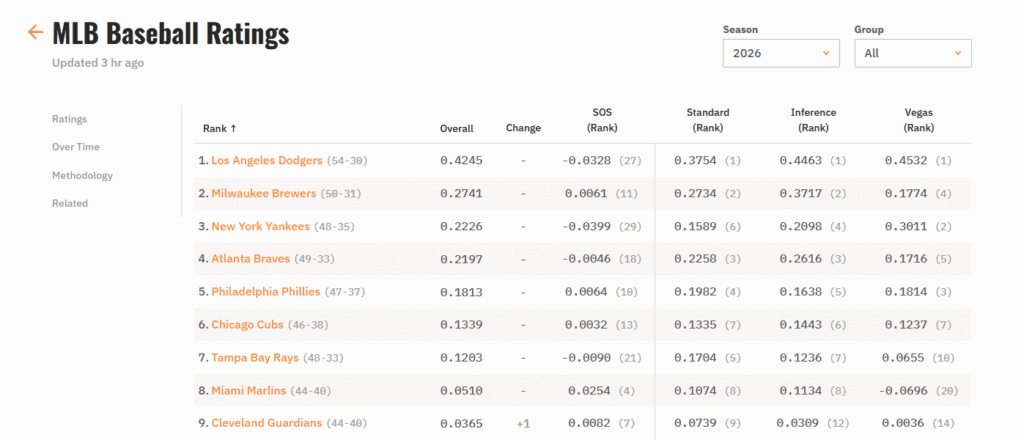
MLB Power Ratings: 3 Types – Standard, Inference and Vegas
How I Build Them
I start with results. Final scores, margins, and where the game happened all feed into the system. A road win at a tough place carries more weight than a home blowout against a cupcake.
Opponent strength matters a lot. Beating a top team by seven can say more than beating a weak team by twenty. The model pushes teams up or down based on who they play, not just how much they win or lose by.
I also smooth out weird games. One fluky blowout or triple‑overtime thriller doesn’t get to rewrite a team’s story. The system tempers those extreme outcomes so ratings move in a controlled way over time.
Home field and situational spots sit outside the rating. The rating itself describes a neutral field. When I project a specific matchup, I add or subtract for travel, rest, altitude, and other edges on top of that base number.
Early in the season, I lean more on prior expectations and move teams slowly. As we get more data, the model trusts the current‑season results more and lets teams shift faster. Over a full year, the ratings settle into a picture that matches how good teams really are, not just how hot they looked last weekend.
How To Use Them for Betting
Start with your number. Take your rating for Team A. Subtract your rating for Team B. Then add home field for the host team. That gives you your “fair” spread on the game.
Now hold that number up against the sportsbook line. If you make Team A ‑4 and the book posts Team A ‑1, you’re looking at a 3‑point edge. That gap tells you where to dig deeper and maybe fire a bet.
Use your ratings to filter the board. Don’t try to handicap every game from scratch. Scan for the biggest differences between your spread and the market. Spend your time on those.
Ratings also help you stay sane. Prime‑time blowouts and bad beats mess with your head. Your system doesn’t care about hype. It sees the full season. Many times it will barely move after a game that feels huge to fans. That discipline is where long‑term profit lives.
You can push the same logic into futures. Turn rating gaps into win probabilities for each game on a schedule. Add those up to get your own view on season win totals and playoff odds. Then compare your numbers to posted futures and look for spots where the market drifts too far from your view.
Common Mistakes to Avoid
Don’t treat ratings like crystal balls. A rating says what should happen on average, not what will happen tonight. Underdogs win. Favorites lose. Variance is part of the deal.
Avoid chasing every recent result. If you overhaul your ratings after one ugly game, you’re reacting, not modeling. Let the system move teams in a steady way.
Don’t force your numbers to match the market. The whole point is to have your own view. If you bend your ratings to fit the line, you kill your edge.
Finally, remember that ratings are a tool, not a shortcut. They point you toward good bets. They don’t replace watching injuries, travel, weather, and matchup quirks. Combine the numbers with solid judgment, and they start to pay off.